


Bridge abutments and earth pressure relief
Project information
Construction project
Motorway 74 near VenloCustomer
Rijkswaterstaat – Ministerie van Verkeer & WaterstaatConstruction
Dura Vermmer Divisie Infra B.V.Location
Venlo , NLConstruction time
March - May 2011Products used
Project details


Solution
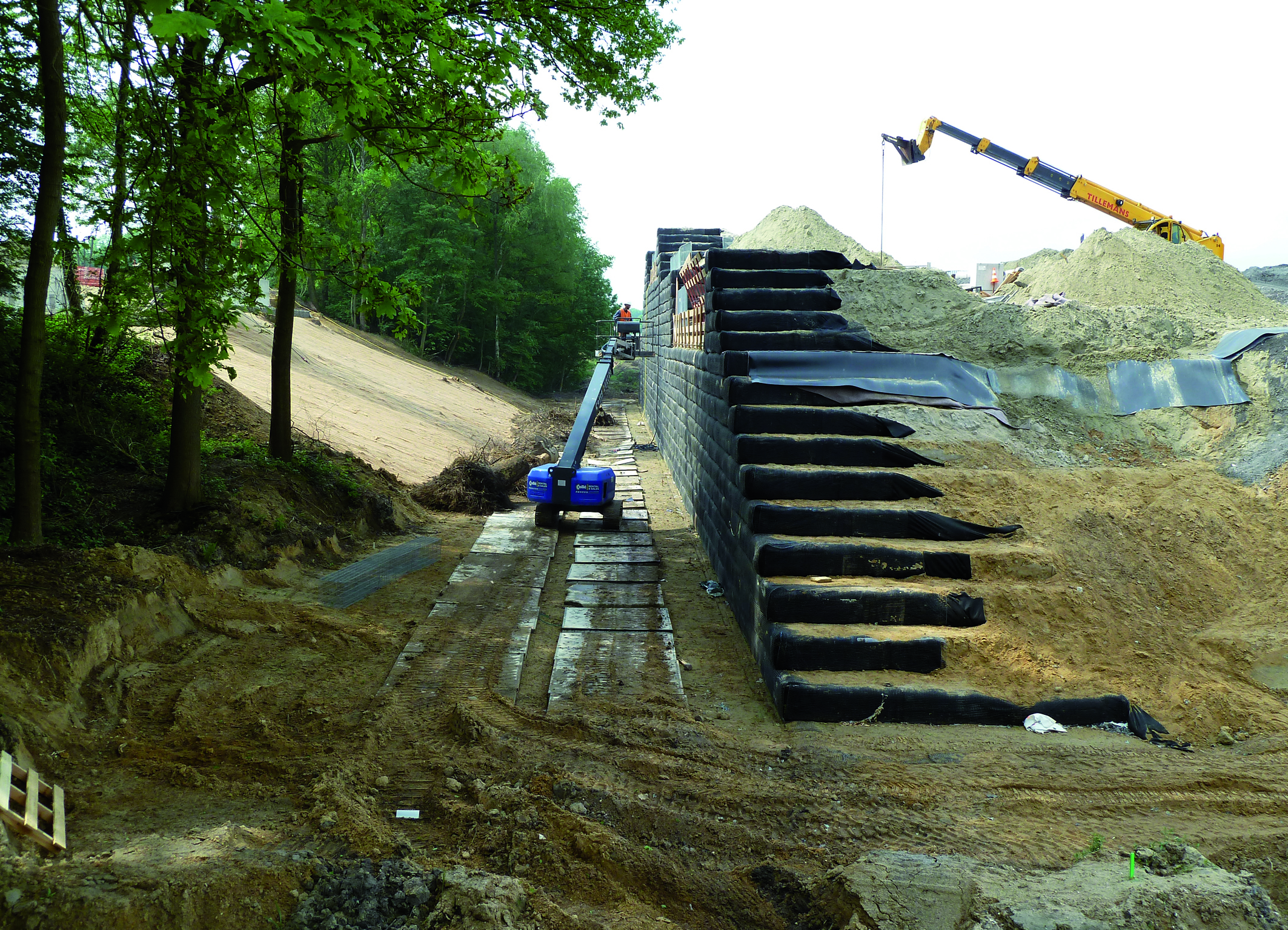
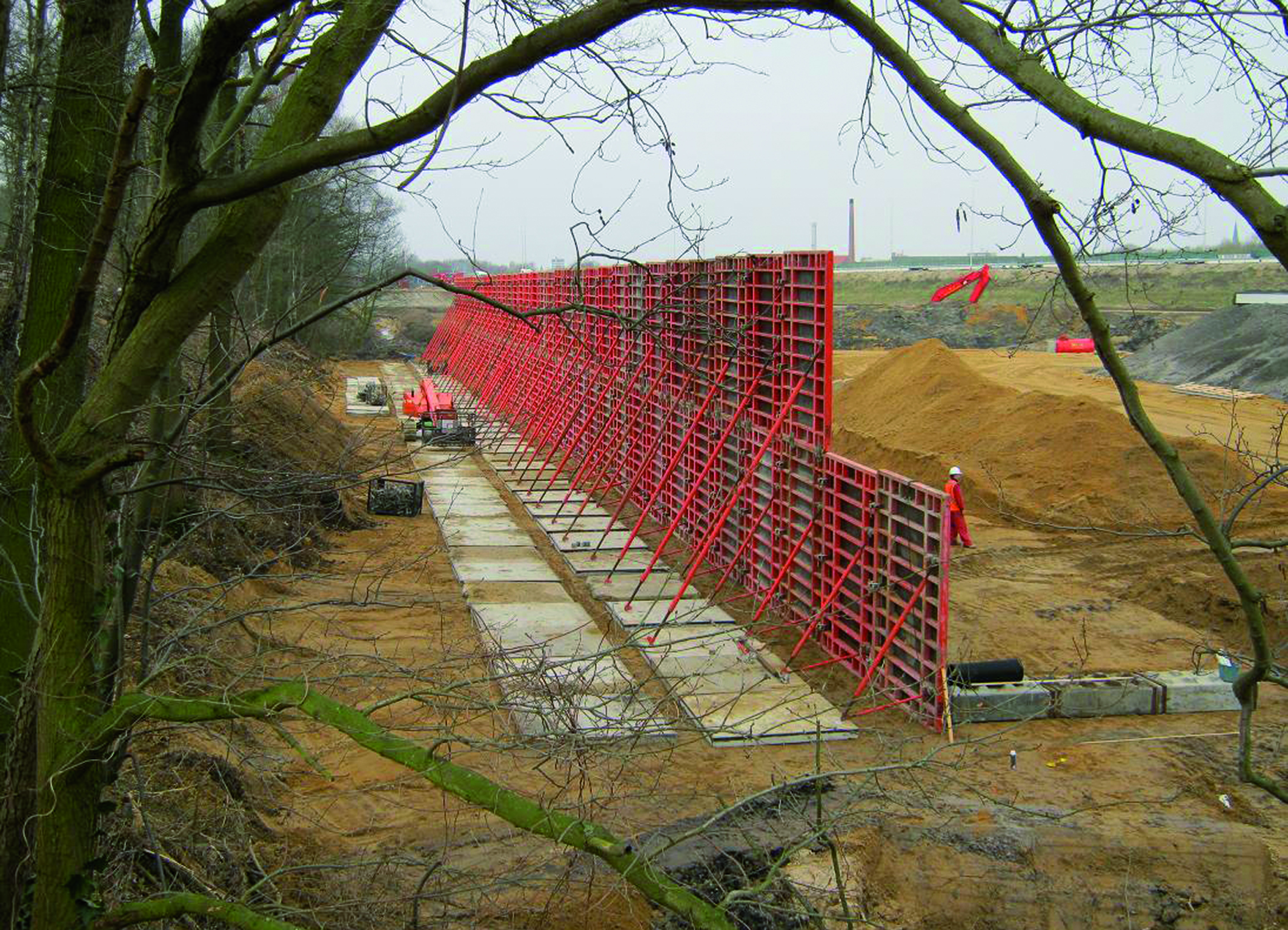
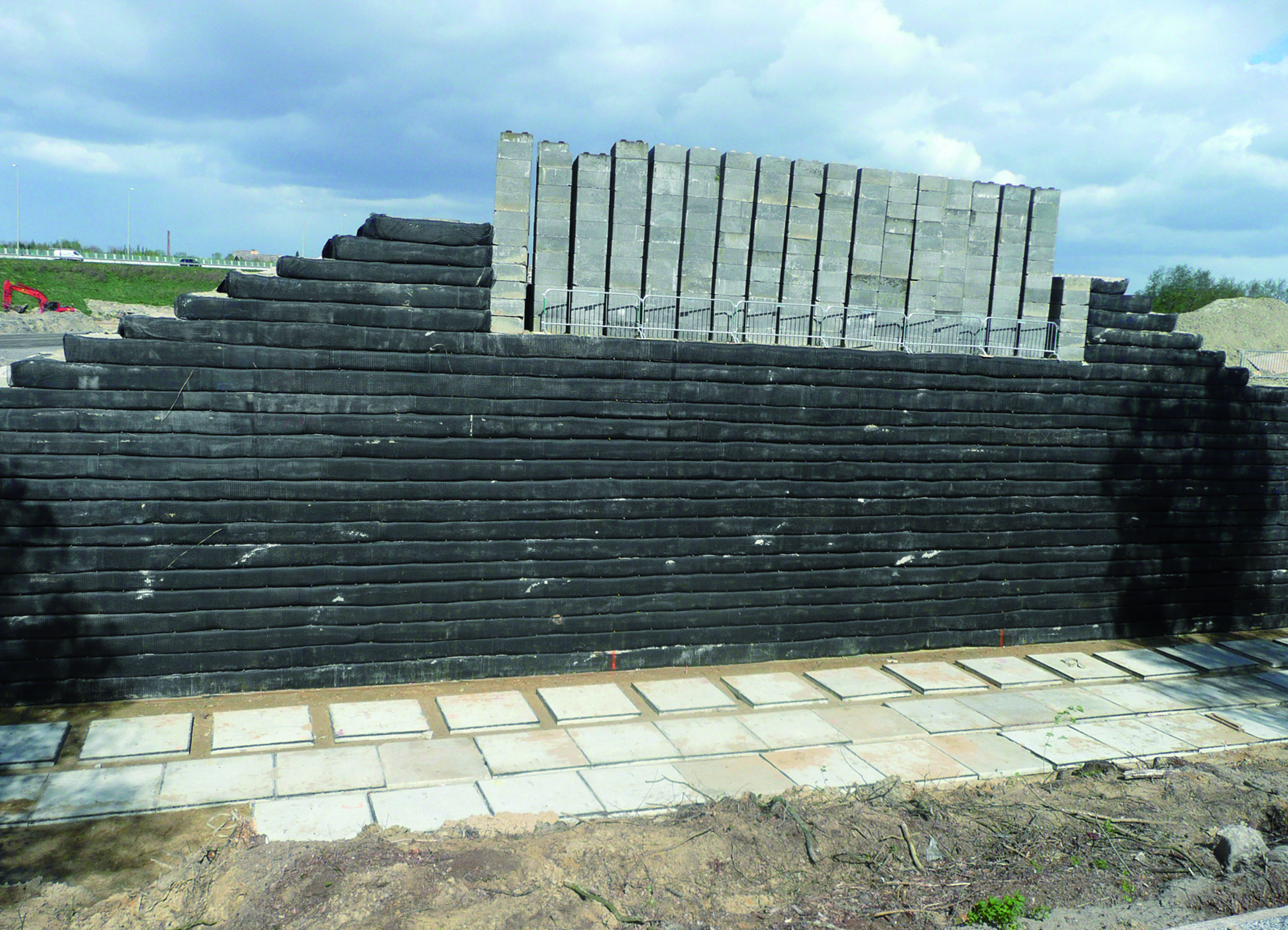
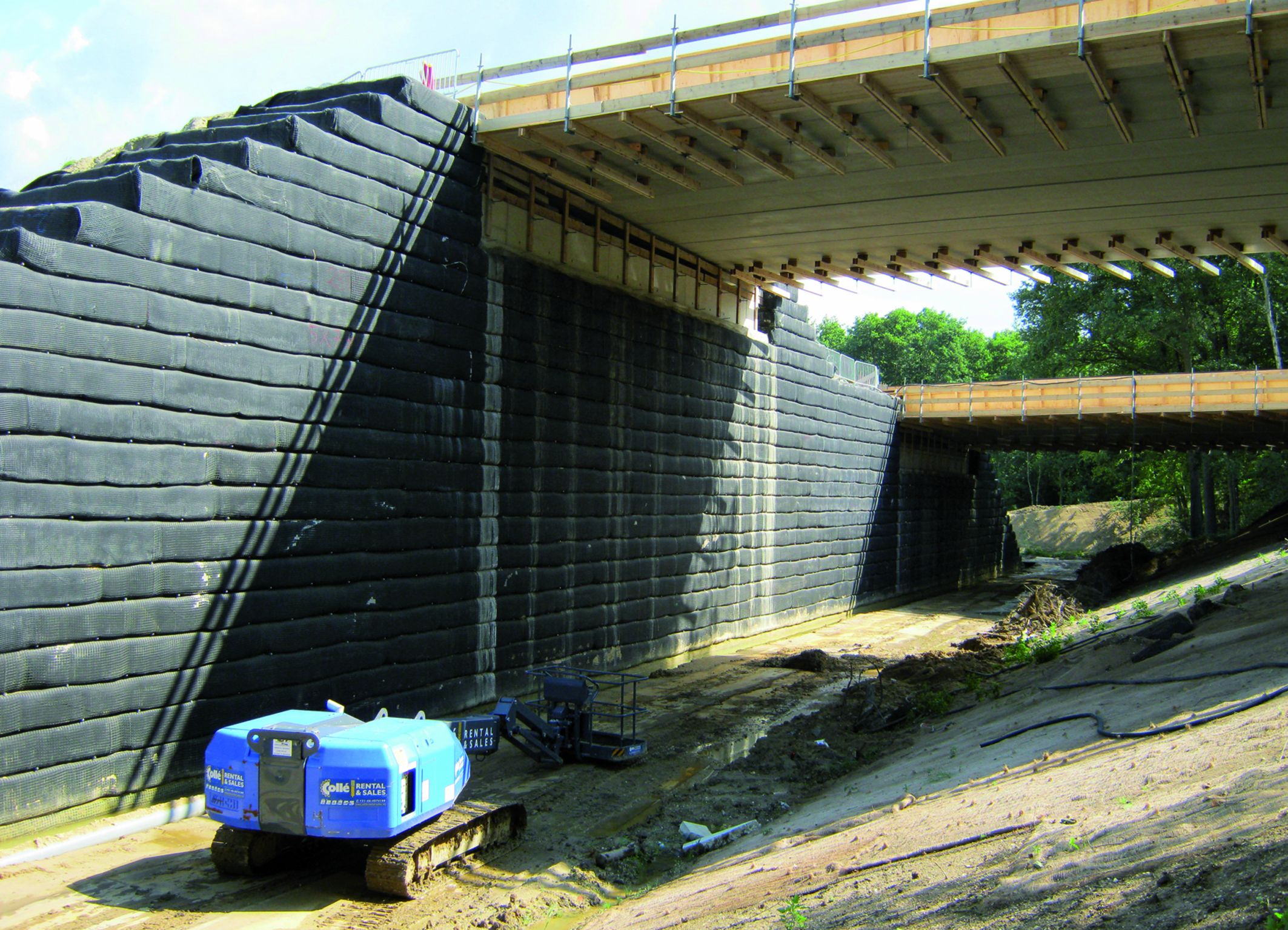
The individual bridge structures were constructed using Fortrac geogrids in a cushion construction method. This flexible construction method is particularly suitable for inhomogeneous, soft ground conditions. A HaTe geotextile was provided in the overlap area of the geogrids to protect against erosion and runoff. Instead of permanent formwork in the form of angled reinforcing steel meshes, large-area formwork was used in the construction of the bridge abutments for KW 4 and KW 4A, enabling a particularly cost-effective construction process whilst simultaneously ensuring a level front face.
For the approximately 7.0 m high abutment KW 4, the Fortrac Nature system was used to create a ramp to the bridge structure and, at the same time, to relieve earth pressure on the abutment clad with concrete panels. The need to limit horizontal wall deformations, as well as the planned use of fill material with a high proportion of fly ash (Avi-Ash), required the use of reinforcement that is resistant to alkaline environments and extremely rigid in terms of elongation. The choice naturally fell on Fortrac. The special properties of the raw material polyvinyl alcohol (PVA) used in its manufacture ensure long-term durability whilst maintaining the permissible deformations.
This structure serves to span the Wilderbeek stream and allows animals to cross beneath the A74 motorway. One of the bridge abutments was constructed as a geosynthetic-reinforced retaining structure using the Fortrac Gabion system. The bridge superstructure, which is subjected to heavy goods traffic, was supported directly on the earthwork reinforced with high-tensile, low-creep Fortrac geogrids. The tight timeframe for implementing the project required high pre-loading of the soft subgrade to reduce long-term settlement to an acceptable level. The maximum height of KW 4A is 11.0 m at the edge and 9.0 m in the area of the abutment. The spacing between the geogrids is uniformly 50 cm. The Fortrac Gabion system consists of the structurally load-bearing KBE body and a slender steel mesh structure placed in front of it, which can be backfilled either with stones or with soil suitable for vegetation. This system thus enables both structural and design requirements to be met. The design also allows for the steel mesh structure to be installed at a later stage. This prevents harmful effects caused by settlement differences between the cladding and the KBE.
In the event of damage caused by impact or other unforeseen stresses, the steel mesh structure can be easily replaced as a non-load-bearing cladding.
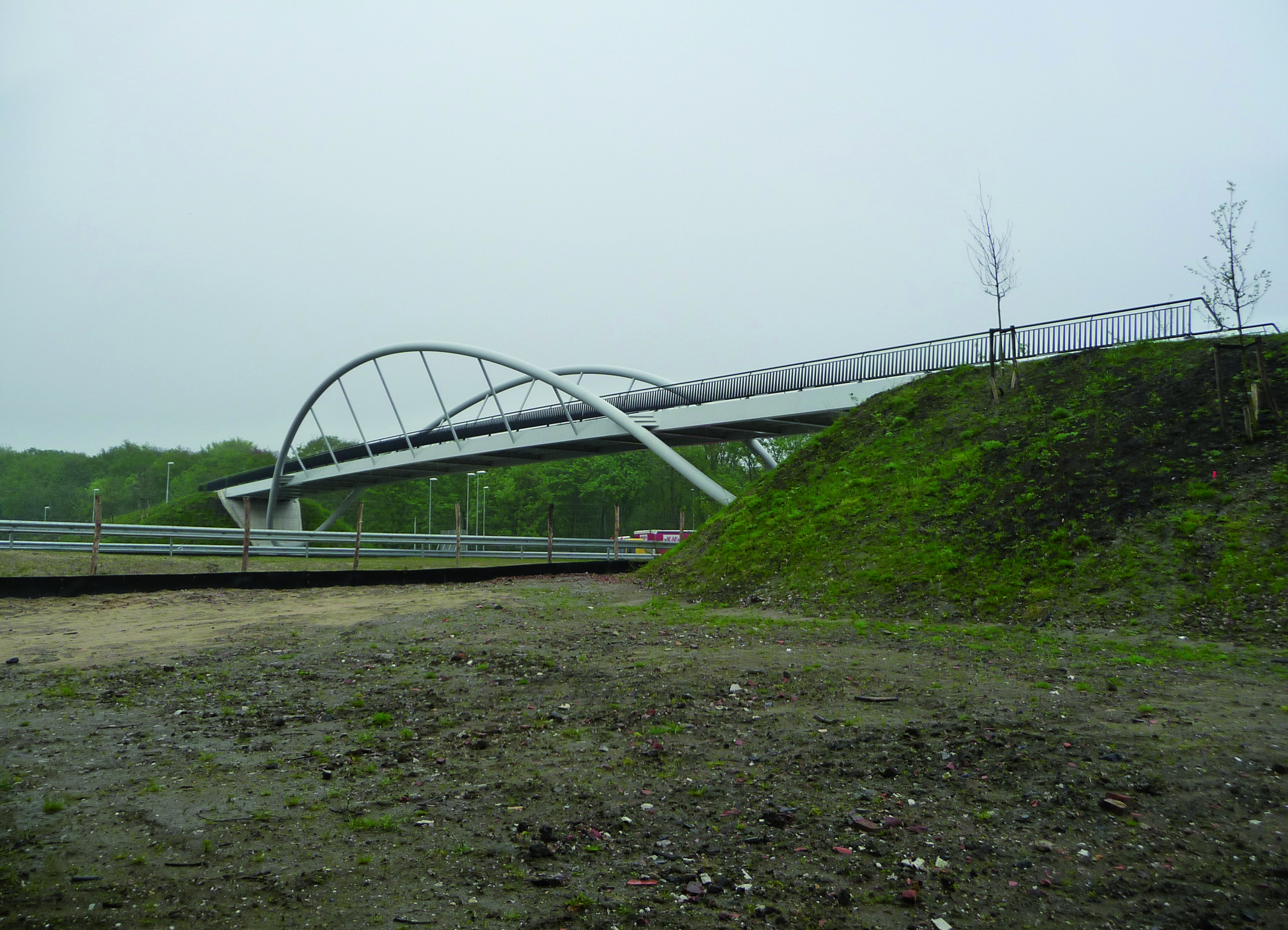
Architecturally sophisticated in design, KW 5 offers pedestrians and cyclists a safe way to cross the A74. Here, the Fortrac Nature system was used to relieve earth pressure on the abutments. The construction of steep embankments allowed for minimal land use and reduced earthworks compared to unreinforced embankments.
Conclusion
The works on the A73/A74 convincingly demonstrate the use of innovative construction methods even in demanding civil engineering structures. The positive experience gained worldwide with the Fortrac Systems suggests that this cost-effective and aesthetically viable construction method will become increasingly prevalent.
Further information