

Dike rehabilitation on the Rench flood canal
Project information
Construction project
Dike rehabilitationCustomer
Freiburg Regional Council, Environment Department / 53.1Construction
Amann GmbH, SasbachLocation
Rheinau-Freistett , DEConstruction time
04/2011 – 07/2011Products used
Project details


Situation
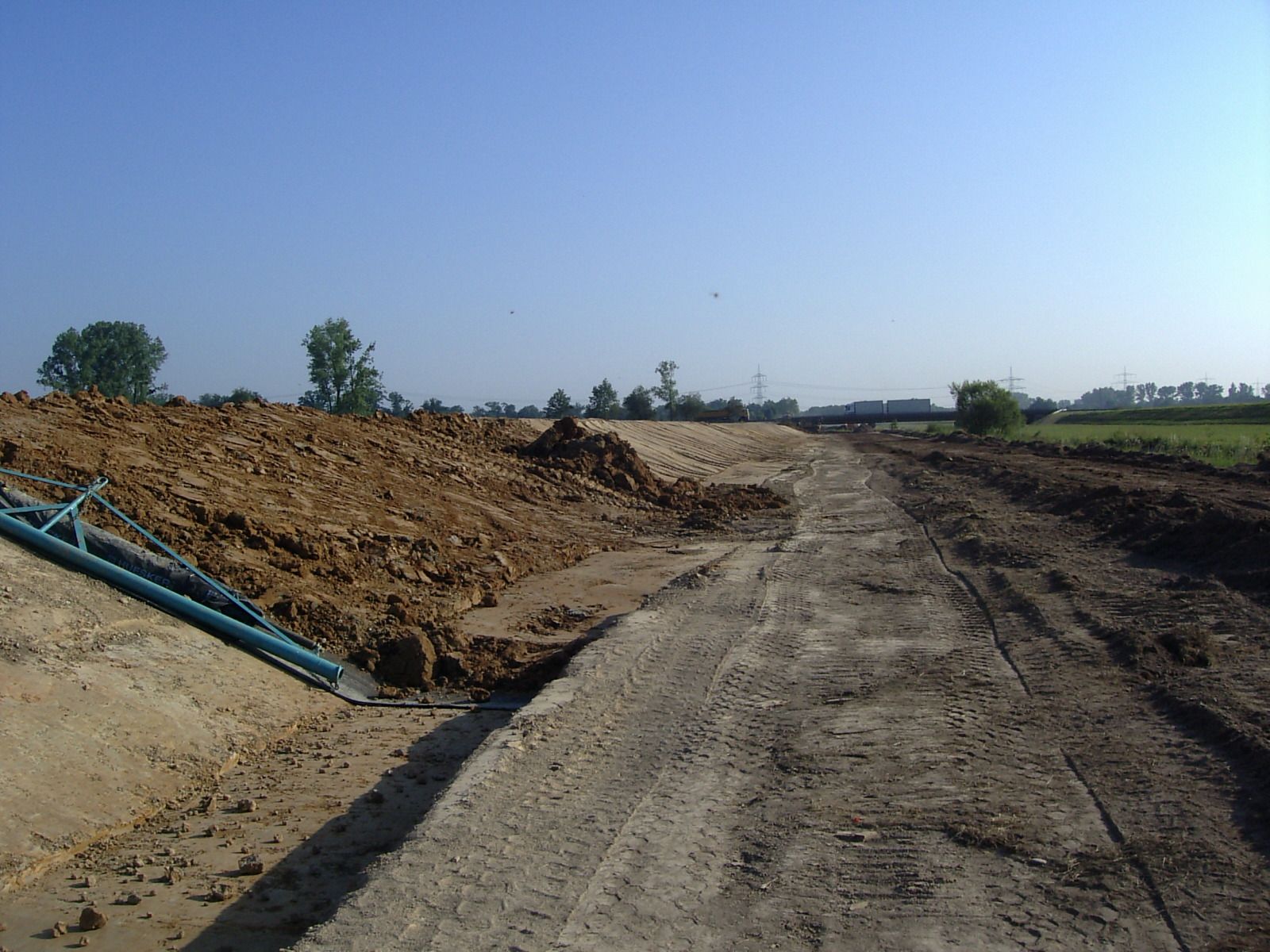
The Rench Flood Canal in Baden-Württemberg, designed as a flood control system and approximately 14.7 km long, accommodates floodwater from the upper reaches of the Rench. Soil mechanics and dyke engineering reports by the engineering firm Ingenieurbüro für Bodenmechanik und Grundbau Dr.-Ing. Orth GmbH from Karlsruhe revealed that the dykes, built between 1936 and 1968, did not comply with current engineering standards. Furthermore, the necessary stability during flood discharge could no longer be guaranteed. The greatest weakness proved to be the lack of freeboard over long sections between the highest design water level and the dyke crest. To prevent the dyke from being overtopped, the affected areas had to be raised by approximately 1 m and the trapezoidal profile reinforced overall. The artificial watercourse was designed for a flood discharge of 230 m³/s.
Solution
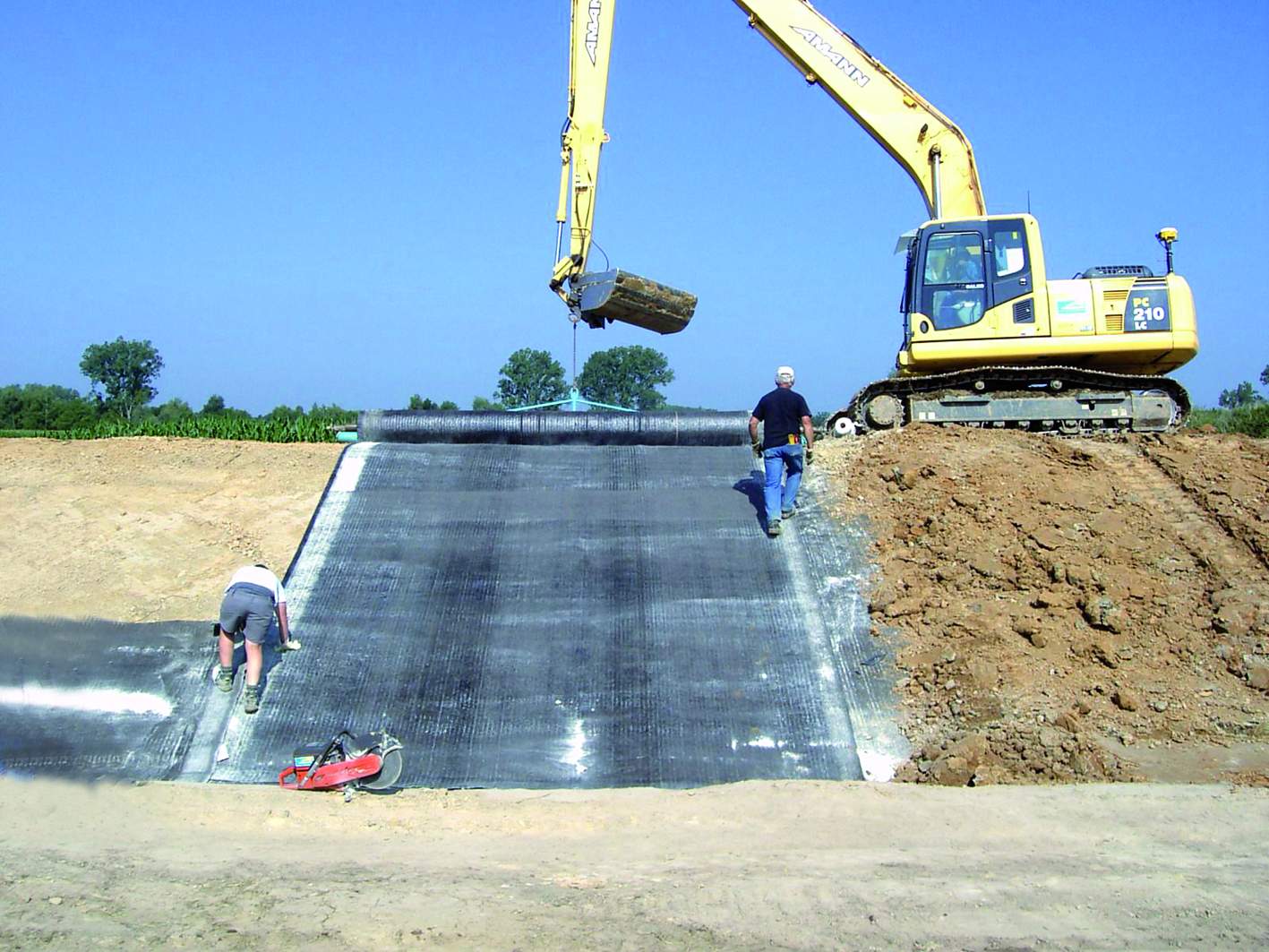
The renovated, higher dyke body features a permanent, functional seal with significantly improved compactness. To achieve this, geosynthetic clay liners (GCLs) were installed over the entire surface of the embankment on the water side. The GCL achieves its high sealing effect through the force-fit bond between robust carrier layers and an internal, swellable clay layer. Even under low loads, the encapsulation of the sodium bentonite used and swelling due to water absorption creates a sealing clay layer. The industrial production of the GTD guarantees consistently high, tested quality and is ideally suited for reliable, long-term dyke sealing. The robust yet flexible base and top layers made it possible to bring the composite material into direct contact with the existing on-site soil materials without the need for additional protective layers. At the same time, the special rough surface structure of the GTD ensured the necessary stability in steeper embankment areas, both during construction and in the final state.
Advantages
The economic advantages of GTD lie in its high laying capacity and reduced number of overlaps, thanks to the large roll widths (up to 5.10 m). The factory-prefabricated edge fillings minimise the need for additional application of bentonite powder on site. In addition, the special surface coating allows installation even in light rainfall, such as drizzle or brief showers, without premature swelling. On site, two people were able to install around 1,000 m² of GTD per day.